ADSP Op-Ed: Amid Afghanistan’s Emergency, Its Neighbors Need Support
This article was originally published in The Diplomat and can be viewed in its original form here.
On the world stage, Afghanistan risks becoming a forgotten crisis, despite rising humanitarian needs. But its closest neighbors don’t have the luxury of looking the other way.
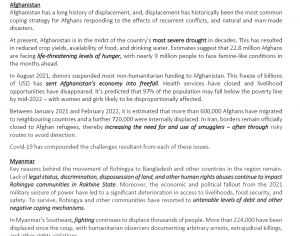
The economic, humanitarian, and social decline in Afghanistan since the fall of the country to the Taliban is well-documented. Since August 2021, cash liquidity challenges have affected large swathes of the population; numerous public services such as healthcare are on the precipice of collapse; and women’s and girls’ rights continue to be curtailed. As a result of the multitude of compounding challenges, millions of people have lost their livelihoods, and tens of millions more are facing various degrees of food insecurity. The situation for the people of Afghanistan remains one of the most pressing humanitarian situations globally.
While the conditions inside Afghanistan are indeed alarming, ongoing efforts must also be directed to address the situation for millions of Afghans in neighboring countries, primarily Iran and Pakistan. The number of registered Afghan refugees in these countries is estimated at nearly 2.1 million, with another 4 million undocumented Afghans living within their borders. To put this in perspective, the number of Afghans in these countries is greater than the entire population of Norway.
Displacement from Afghanistan to neighboring countries is nothing new, and in fact is one of the largest protracted refugee situations globally. In many cases refugees have been displaced for up to four decades. According to UNHCR, from January 2021 to June 11, 2022, approximately 179,000 refugees have officially made their way to neighboring countries, either fearing persecution or seeking to escape the dire economic conditions. Of those, over 117,000 fled to Pakistan and nearly 43,000 to Iran.
However, the number of actual arrivals – many of whom have not been able to officially register as refugees – is far higher. According to figures from the government of Iran, the number of recent arrivals to Iran alone is closer to 1 million.
Despite many refugees having been provided a semblance of immediate safety in these countries, their ability to remain long-term or to integrate is tenuous at best. Faeza, an ambassador for the Asia Pacific Network of Refugees (APNOR) – a regional refugee-led initiative – describes “a huge number of arrivals especially to cities such as Mashad.” Further she describes many “arriving with no documents, and so access to education or any sustainable work is incredibly difficult.” Access to protection and long-term solutions is scarce, and therefore, most Afghans remain in perennial limbo.
Are Afghanistan’s Neighbors Doing Enough?
While far from perfect, both Iran and Pakistan have for many years maintained various progressive policies to support Afghan refugees in areas such as healthcare, livelihoods, and education. For example, in Iran, Afghan children (both officially registered and not) have access to education and are also exempted from school fees. Nearly 600,000 Afghan children are enrolled in Iranian public schools, studying together with their Iranian peers.
In Pakistan, refugees are also allowed to attend school, although there remain significant numbers of out-of-school children. In recent months, the Pakistani government, with the support of UNHCR, has also concluded a large-scale identity registration drive. This process provided hundreds of thousands of Afghan refugees with identity cards, facilitating “faster and safer access to health and education facilities and to banking services.” The Commissionerate for Afghan Refugees has also recently established the Urban Refugees Support Unit to address refugees’ difficulties accessing sustainable livelihoods and other protection risks.
On the flip side, there are numerous areas where host states still need to significantly improve their treatment of refugees. Some of the most prominent challenges currently faced by refugees in Iran and Pakistan include difficulty accessing asylum procedures, an inability to access adequate livelihoods, and the constant fear of return to Afghanistan. Understandably, host countries are struggling to absorb such large numbers of Afghans, and as such, thousands are being returned – or feeling compelled to return – to Afghanistan each week. However, the pace and nature of these returns raises concerns about the voluntariness of the process, as well as the safety and dignity being afforded to Afghans.
Therefore, it’s important that donors more proactively support refugee-hosting governments to help them implement more progressive refugee policies. This can be done by supporting the development and implementation of refugee status determination procedures or through supporting sustainable livelihood opportunities and services such as health and education for refugees and local host communities alike. Another option can be offering support to host states to help them incorporate refugee-hosting arrangements into their national development plans. Such engagement from the international community can only further the existing contributions – both economic and social – of Afghans to Iran and Pakistan.
What Should Be Done First?
For displaced Afghans to have any hope of unlocking long-term solutions, the international donor community – in partnership with hosting states and institutions like UNHCR and IOM – must reaffirm common goals and take clear action. While there is a long list of things requiring support, there are several areas that should be prioritized for immediate action.
The need to preserve and expand asylum space in neighboring countries, while also allowing for registration of new arrivals from Afghanistan, is a pressing concern. Without this, refugees will not have access to basic protections, nor will they be able to live without fear of potential return. In addition, host and donor states must ensure that returns to Afghanistan are principled, safe, voluntary, supported, and well-managed. Finally, there also needs to be increased investments in education, more programs that support refugees to build their self-reliance, and an expansion of pathways for third country resettlement as well as alternative migration pathways.
Admittedly, this is no easy feat, or it would have been achieved already. The obstacles faced by Afghans during displacement are complex, and the expectation for refugee-hosting countries to provide all that is needed for them is unrealistic, especially with the existing low levels of international support. However, with new influxes out of Afghanistan, and no end in sight for the humanitarian needs inside the country, now is the time for the international community to take stock, recalibrate, and come together to support Afghanistan’s neighbors more systematically in strengthening their protection systems.
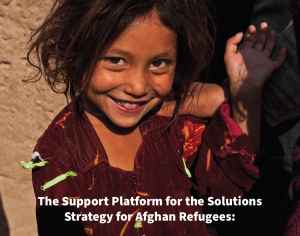
Such support can be provided through existing mechanisms such as the Support Platform for the Solutions Strategy for Afghan Refugees as well as through additional innovative endeavors. It’s prudent to note that the existing Support Platform operates with significant gaps in relation to its ability to meaningfully engage with NGOs and civil society. As such, the international community needs to forge new ways to work more closely together and develop inclusive refugee responses and coordination.