ADSP
  • WHO WE ARE
    • History
    • Where we work
    • ADSP Strategy 2023-2025
    • Our team
    • Governing body
  • WHAT WE DO
    • Projects
    • TRAININGS AND WORKSHOPS
    • Research
    • Advocacy
    • Our Impact
    • RESOURCES
      • Global
      • Region
      • Afghanistan
      • Iran
      • Pakistan
      • Policies & Strategies
  • PUBLICATIONS
    • Research Reports
    • Statements
    • Press Releases
    • Briefing Notes
    • Submissions
    • Opinion Articles / media
    • NEWSLETTERS
  • VISUALISATIONS
    • Herat data visualisation
  • TRAININGS
  • CONTACT US

News

HomeNews

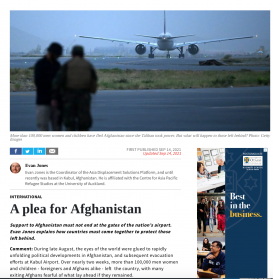
Op-Ed: A plea for Afghanistan

September 20, 2021

Support to Afghanistan must not end at the gates of the nation’s airport. Evan Jones explains how countries must come together to protect those left behind. 

Comment: During late August, the eyes of the world were glued to rapidly unfolding political developments in Afghanistan, and subsequent evacuation efforts at Kabul Airport. Over nearly two weeks, more than 100,000 men women and children – foreigners and Afghans alike – left the country, with many exiting Afghans fearful of what lay ahead if they remained.

Even before the recent change in the nation’s political landscape, Afghanistan was already in the throes of immense humanitarian challenges. Amid the country’s second drought in less than four years, nutritious food is simply not available to millions, leading to widespread childhood malnutrition. Exacerbated by the crippling effects of conflict, Covid-19 and a harsh winter rapidly approaching – the country remains in humanitarian crisis.

According to the United Nations Humanitarian Response Plan, more than 18 million Afghans in 2021 – almost 50 percent of the country’s population – need emergency humanitarian assistance, from food and water, to shelter and medicine. In addition, the World Food Programme notes approximately one-third of the country is facing food insecurity and two million children are already malnourished.

With the withdrawal of international troops, life for everyday Afghans has become even more difficult. In Kabul and across the country, there have been numerous examples of wheat, cooking oil and rice prices surging, placing additional pressure on already stretched family budgets. Afghanistan’s currency, the Afghani (AFN), has dropped in value to the $USD, and banks and ATMs remain primarily closed. This has made it incredibly difficult for individuals and families to access their savings, thereby further compounding already precarious living situations with household debt – most of which is taken on to pay for food and medicine – already at crippling levels compared to 2019 and 2020.

One young woman, Maryam*, described her decision to leave Kunduz in northern Afghanistan and make her way to Kabul to stay with relatives. She noted that “The situation in Kunduz was so unpredictable. We did not know what was going to happen and I could not find any work. I was scared to send my kids to school. We still do not know what will happen next, and we may have no choice but to leave. For now, we are together, but it is not easy.”

While the picture for many Afghans like Maryam looks bleak, this doesn’t need to be how the story ends.

Humanitarian interventions urgently needed, regardless of who’s in power

Despite Afghanistan’s overwhelming humanitarian needs, there are humanitarian organisations with existing operational footprints on the ground committed to ‘staying and delivering’. Through United Nations agencies, international non-governmental and national civil society organisations, emergency support and lifesaving activities can be delivered across almost all corners of the country. In 2019, approximately 93 percent of districts across Afghanistan were provided with humanitarian assistance.

However, such endeavours cannot be undertaken in a vacuum; swift engagement and support by the international community is essential to ensure success. Currently, humanitarian organisations have less than 40 percent of the funds needed to address immediate needs; many Afghans’ everyday necessities simply cannot be provided. If left unaddressed, these lifesaving needs will only grow, contributing to unnecessary and unavoidable human suffering.

Guided by the United Nation’s joint operating principles (JOPs) – a document that provides the framework for engagement with authorities and armed groups at all levels – the humanitarian community in Afghanistan is committed to the principles of humanity, neutrality, impartiality, and operational independence. Through this framework, agreed with the Taliban, humanitarian agencies strive to provide assistance guided solely by needs, with priority given to the most vulnerable cases. As such, donors and the international community can have faith that their funding is being used strategically and efficiently to deliver the strongest possible humanitarian outcomes.

Propelling international commitments into action

In addition to meeting urgent humanitarian needs, it is crucial that countries and organisations come together to collectively provide protection to Afghan refugees on the move and those in neighbouring states. Despite reported ‘quiet’ across the country, Afghans witnessed record-breaking levels of violence with more than 5000 casualties, including more than 1600 deaths in the first six months of 2021 alone. Coupled with widespread uncertainty of what life will be like under new political leadership, many people remain terrified for their own lives and the lives of their families, and desperately seek refuge until they can safely return.

Less than three years ago, the United Nations General Assembly affirmed the Global Compact on Refugees. This document provides a framework for more equitable responsibility-sharing by states for refugee crises through greater international collaboration. Now adopted by 181 nations, the GCR tackles potential large-scale movements of people and addresses situations such the one happening in Afghanistan right now. Only through supporting the improvement of conditions in countries of origin, expanding access to third country solutions, and supporting host countries, can people who have fled Afghanistan have any hope of accessing long-term solutions to their displacement.

With foreign evacuation efforts finished, and all international troops now departed, it is essential the world remains engaged and committed to supporting the people of Afghanistan. Through the recent announcement by Foreign Minister Nanaia Mahuta to commit $3 million in aid to Afghanistan, New Zealand has taken a crucial first step. And while humanitarian assistance is not a panacea, it is essential in helping millions of Afghans including women and girls to meet their basic needs.

Importantly, New Zealand can engage even further, whether it be through additional government resettlement places for at-risk Afghans, or for universities to explore innovative supports such as waiving tuition fees or creating scholarship opportunities. Support to Afghanistan must not end at the gates of the nation’s airport, but rather, it must extend to the country’s 38 million strong population, ensuring that they have what they need to live safe, dignified and fulfilling lives wherever they may be.

The article was originally published in NewsRoom NZ, and can be found here.
TagsAfghanistan

Related Posts

Newsletters

ADSP Newsletter: Q4, 2025

March 11, 2026
Newsletters

ADSP Newsletter: Q3, 2025

December 12, 2025
Publications

Research Brief: Durable Solutions Analysis in Herat (July 2025)

August 28, 2025
Newsletters

ADSP Newsletter: Q2, 2025

August 18, 2025
Newsletters

ADSP Newsletter: Q1, 2025

May 29, 2025
Publications

ADSP Statement: One million Afghans returned from Pakistan at risk if unsupported

May 23, 2025
Newsletters

ADSP Newsletter: Q4, 2024

January 30, 2025
Opinion Articles / media

Expert Analysis: Water, climate, and refuge across Afghanistan and the sub-region (October 2024)

November 29, 2024
Newsletters

ADSP Newsletter: Q3, 2024

November 19, 2024
Publications

Research Brief: Durable Solutions Analysis, Jalalabad/Nangarhar (August 2024)

September 5, 2024
Newsletters

ADSP Newsletter: Q2, 2024

August 14, 2024
Publications

Research Brief: Land Allocation Schemes for the Displaced in Afghanistan (June 2024)

August 6, 2024
Newsletters

ADSP Newsletter: Q1, 2024

June 7, 2024
Briefing Notes

Briefing Note: Solutions for Afghan nationals ordered to return from Pakistan

May 13, 2024
Newsletters

ADSP Newsletter: Q4, 2023

December 27, 2023
Briefing Notes

ADSP Briefing Note – Afghan Children’s Access to Education in Iran and Pakistan

December 22, 2023
Briefing Notes

ADSP Briefing Note – Forced to migrate: Afghan women waiting for protection in Iran and Pakistan

December 22, 2023
News

ADSP-ICVA Statement – The SSAR Support Platform: ‘Showing Resilience, Seeking Solutions’

December 13, 2023
News

NGO Statement on Protection at UNHCR 74th Executive Committee Meeting

October 14, 2023
Newsletters

ADSP Newsletter: Q3, 2023

October 14, 2023
Briefing Notes

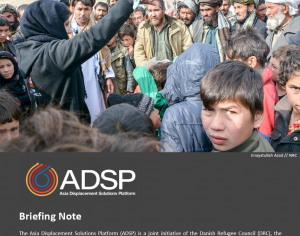
ADSP-ICVA: Explainer to the Support Platform for the Solutions Strategy for Afghan Refugees

September 10, 2023
News

ADSP Newsletter: Q2, 2023

June 24, 2023
Briefing Notes

ADSP Briefing Note: Local Integration? Insights from the field, and from a local NGO working on improving the resilience of displacement affected communities

May 17, 2023
Opinion Articles / media

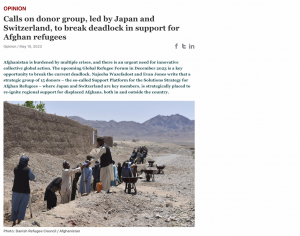
ADSP Op Ed: Calls on donor group, led by Japan and Switzerland, to break deadlock in support for Afghan refugees

May 10, 2023
Briefing Notes

ADSP Briefing Note: Local Integration for IDPs in Kandahar? Insights from the field

April 22, 2023
Newsletters

ADSP Newsletter: Q1, 2023

March 31, 2023
Briefing Notes

ADSP Expert Commentary #2: Rethinking Durable Solutions in Peri-Urban Areas in Pakistan

March 26, 2023
Briefing Notes

ADSP Expert Commentary #1: Afghan refugees in Pakistan – Protracted displacement or protracted settlement?

March 20, 2023
TRAININGS AND WORKSHOPS

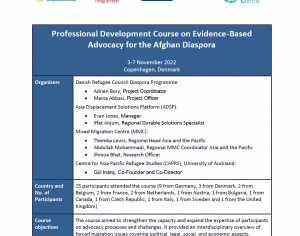
Professional Development Course on Evidence-Based Advocacy for the Afghan Diaspora

January 4, 2023
Briefing Notes

Briefing Note: IDP returns in Afghanistan: are durable solutions possible?

October 17, 2022
Newsletters

ADSP Newsletter: Q3, 2022

October 11, 2022
Newsletters

ADSP Newsletter: Q2, 2022

July 13, 2022
Opinion Articles / media

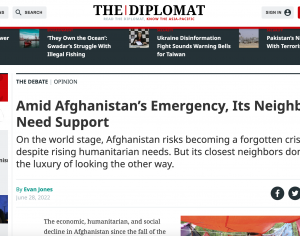
ADSP Op-Ed: Amid Afghanistan’s Emergency, Its Neighbors Need Support

June 27, 2022
News

ADSP Article: Lessons from drought response in Afghanistan

May 29, 2022
Newsletters

ADSP Newsletter: Q1, 2022

April 18, 2022
News

ADSP Submission: Intersessional Panel Discussion on the human rights of migrants in vulnerable situations

March 8, 2022
News

ADSP Newsletter: Q4, 2021

January 17, 2022
News

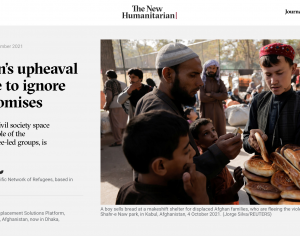
ADSP Op-Ed: Afghanistan’s upheaval is no excuse to ignore local aid promises

November 30, 2021
News

UK Foreign Affairs Committee inquiry into the future of UK policy towards Afghanistan following the international military withdrawal: Written evidence submitted by Asia Displacement Solutions Platform (AFG0014)

October 15, 2021
Newsletters

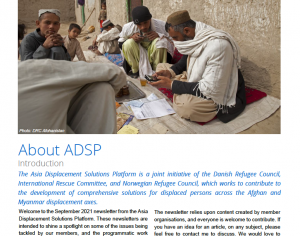
ADSP Q3 Newsletter 2021

October 1, 2021
News

ADSP Op-Ed: As international troops depart Afghanistan, the threat of landmines remains

August 11, 2021
News

Statement: Rising instability necessitates immediate suspension of deportations to Afghanistan

July 15, 2021
News

ADSP Op-Ed: Troop withdrawals won’t end Afghanistan’s humanitarian crisis

June 19, 2021
News

ADSP Op-Ed: Forced return of Afghans hampers the pursuit of durable solutions

April 22, 2021
Publications

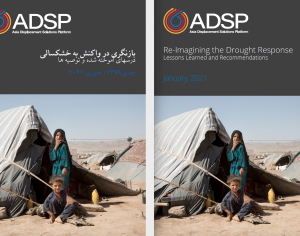
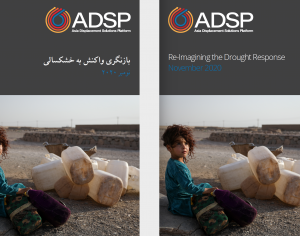
Lessons Learned & Recommendations: Re-Imagining the 2018 Afghanistan Drought Response

January 31, 2021
Publications

Re-Imagining the 2018 Afghanistan Drought Response

January 31, 2021
News

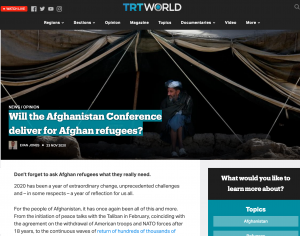
ADSP Op-Ed: Will the Afghanistan Conference deliver for Afghan refugees?

November 24, 2020

Recent Posts

  • ADSP Newsletter: Q4, 2025
  • ADSP Newsletter: Q3, 2025
  • Toward Durable Solutions: Mapping and Analysis of Displacement Data in Asia and the Pacific
  • Research Brief: Durable Solutions Analysis in Herat (July 2025)

Funded by

CONTACT US
[email protected]

© ADSP - Asia Displacement Solutions Platform 2022
  • Privacy Policy & Cookie
This website uses cookies to improve your experience. We'll assume you're ok with this, but you can opt-out if you wish.Accept Read More
Privacy & Cookies Policy

Privacy Overview

This website uses cookies to improve your experience while you navigate through the website. Out of these, the cookies that are categorized as necessary are stored on your browser as they are essential for the working of basic functionalities of the website. We also use third-party cookies that help us analyze and understand how you use this website. These cookies will be stored in your browser only with your consent. You also have the option to opt-out of these cookies. But opting out of some of these cookies may affect your browsing experience.
Necessary
Always Enabled
Necessary cookies are absolutely essential for the website to function properly. This category only includes cookies that ensures basic functionalities and security features of the website. These cookies do not store any personal information.
Non-necessary
Any cookies that may not be particularly necessary for the website to function and is used specifically to collect user personal data via analytics, ads, other embedded contents are termed as non-necessary cookies. It is mandatory to procure user consent prior to running these cookies on your website.
SAVE & ACCEPT