ADSP
  • WHO WE ARE
    • History
    • Where we work
    • ADSP Strategy 2023-2025
    • Our team
    • Governing body
  • WHAT WE DO
    • Projects
    • TRAININGS AND WORKSHOPS
    • Research
    • Advocacy
    • Our Impact
    • RESOURCES
      • Global
      • Region
      • Afghanistan
      • Iran
      • Pakistan
      • Policies & Strategies
  • PUBLICATIONS
    • Research Reports
    • Statements
    • Press Releases
    • Briefing Notes
    • Submissions
    • Opinion Articles / media
    • NEWSLETTERS
  • VISUALISATIONS
    • Herat data visualisation
  • TRAININGS
  • CONTACT US

News

HomeNews

ADSP Op-Ed: Forced return of Afghans hampers the pursuit of durable solutions

April 22, 2021

The principles of safety and dignity must not only guide the pursuit of durable solutions, but also the return of rejected asylum seekers to Afghanistan. Successful return involves much more than putting people on a plane. Jared Rowell, Afghanistan Country Director for the Danish Refugee Council, and Evan Jones at the Kabul-based Asia Displacement Solutions Platform write.

On a blustery winter morning in mid-December 2020 after a long hiatus, a plane carrying 40 Afghans whose asylum applications had been denied by Germany arrived at Kabul’s Hamid Karzai International Airport. This was the first such plane to touch down in months since deportations were suspended due to the pandemic. Their arrival has renewed the debate about the return of people to Afghanistan from Europe.
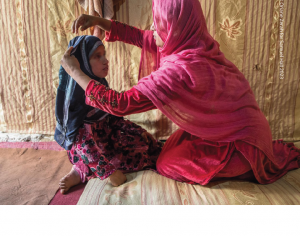
Photo: Danish Refugee Council

Returning rejected asylum seekers to Afghanistan is not as simple as having them board a plane. For returns to be successful, individuals must have the ability to access long-term safety, livelihoods, security of land tenure, and access to basic services. Without this, there is a very real chance that they will be forced to leave again – seeing no other choice but to find those services in a foreign land. Recent survey data from the Mixed Migration Centre shows that among 1,255 returnees interviewed between July 2020 and January 2021, 41 per cent intended to re-migrate when the covid situation allows. A further 38 per cent were uncertain, and only 18 per cent intended to remain in Afghanistan.

There are currently around 2.6 million registered Afghan refugees globally, with the vast majority (almost 2.1 million) hosted by Pakistan and Iran. In 2020, Afghan refugees were the second largest group of asylum seekers in continental Europe, having fled their homeland for a variety of reasons including direct persecution, conflict, economic hardship, and climate induced displacement. Each person has a different reason, in many cases multiple reasons, for leaving in search of a semblance of safety and security.

Afghanistan reportedly has the second highest level of food insecurity in the world, with one in two children under-five expected to face acute malnutrition in 2021. In addition, almost 70 per cent of the population live below the poverty line, attempting to eke out an existence any way they can. Women and girls continue to be deprived of access to health services and education, while tenure insecurity, lack of civil documentation, and gender-based violence remain pervasive. Overlay these challenges with COVID-19, a deteriorating security situation, and a harsh winter, and conditions for many Afghans are precarious.

For recognised refugees, voluntary return is considered a viable long-term solution. However, it must be carefully planned for and supported in both host countries and countries of origin to ensure that the return is sustainable and voluntary.

Notably, any return must be done with caution, and with full respect for all customary and international human rights obligations. This also means that even if, for example, a European country has determined that an asylum seeker does not fulfill the relevant criteria for refugee status as interpreted by that country’s authorities, there may still be strong reasons – such as drought, food shortages, ethnic persecution, civil unrest, rampant unemployment, or land grabs – not to return that person to Afghanistan.

Gul*, a member of the refugee-led Asia Pacific Network of Refugees, was returned involuntarily to Afghanistan without proper support or information after living in Sweden for five years. He has described his return as “coming back to a country that I had no connection with, and one that I feel was worse-off than when I first left.” In addition, he described witnessing extreme violence and insecurity, and being unable to find adequate food and shelter. He was subsequently compelled to leave Afghanistan again, this time making his way to Iran.

It is paramount that governments acknowledge that even though an individual may not meet a strict interpretation of the refugee definition, there may be legitimate reasons not to return him or her to Afghanistan. Return cannot be considered “voluntary,” if one’s only option is prolonged detention or destitution. The concepts of safety, voluntary return and dignity should be central to anyone’s decision to return to Afghanistan. This is especially true for women, who are often exposed to additional challenges in securing their safety and livelihoods.

Data from sources such as the Mixed Migration Centre show that many returnees, including those from Europe and Turkey, struggle upon their return to Afghanistan. For example, among 925 returnees interviewed between January and March 2020, 56% struggled with finding decent work, only 13% were able to access housing, and 19% faced debt. Such impediments are exacerbated by the huge existing number of internally displaced people – some 4.5 million – inside Afghanistan. Engagement with ongoing data collection initiatives should be prioritized by governments to better understand the experiences of arrivals and to adapt policies and procedures accordingly.

Of course, not all returnees will face imminent danger. Some have reunited with family, utilized their skills to create work opportunities, and been able to establish a degree of stability. However, everyone’s circumstance is unique, and this cannot be considered possible for everyone.

The NGO community acknowledges that European and regional policymakers are struggling to grapple with the number of persons that have arrived irregularly. It is also appreciated that European governments have spent, and continue to invest, millions of euros in Afghanistan to improve conditions inside the country. Such support is invaluable and will undoubtedly contribute to the alleviation of the nation’s humanitarian and development needs. However, such support must not be undermined by forcing returns, as this can further destabilase a population that is already facing significant challenges.

The recent prospects of a peace deal currently being negotiated in Doha also raise the risk that European countries might prematurely determine that Afghan refugees and asylum seekers should be returned home. In the event that a peace process is secured, returns need to be handled with utmost caution and in phases so as not to overwhelm the limited resources available. It should also be acknowledged numerous socio-economic, environmental, and conflict issues will not disappear immediately after a peace agreement, and there remain real risks to Afghans upon their return.
TagsAfghanistanrefugeesreturns

Related Posts

Newsletters

ADSP Newsletter: Q4, 2025

March 11, 2026
Newsletters

ADSP Newsletter: Q3, 2025

December 12, 2025
Publications

Research Brief: Durable Solutions Analysis in Herat (July 2025)

August 28, 2025
Newsletters

ADSP Newsletter: Q2, 2025

August 18, 2025
Newsletters

ADSP Newsletter: Q1, 2025

May 29, 2025
Publications

ADSP Statement: One million Afghans returned from Pakistan at risk if unsupported

May 23, 2025
Newsletters

ADSP Newsletter: Q4, 2024

January 30, 2025
Opinion Articles / media

Expert Analysis: Water, climate, and refuge across Afghanistan and the sub-region (October 2024)

November 29, 2024
Newsletters

ADSP Newsletter: Q3, 2024

November 19, 2024
Publications

Research Brief: Durable Solutions Analysis, Jalalabad/Nangarhar (August 2024)

September 5, 2024
Newsletters

ADSP Newsletter: Q2, 2024

August 14, 2024
Publications

Research Brief: Land Allocation Schemes for the Displaced in Afghanistan (June 2024)

August 6, 2024
Newsletters

ADSP Newsletter: Q1, 2024

June 7, 2024
Briefing Notes

Briefing Note: Solutions for Afghan nationals ordered to return from Pakistan

May 13, 2024
Newsletters

ADSP Newsletter: Q4, 2023

December 27, 2023
Briefing Notes

ADSP Briefing Note – Afghan Children’s Access to Education in Iran and Pakistan

December 22, 2023
Briefing Notes

ADSP Briefing Note – Forced to migrate: Afghan women waiting for protection in Iran and Pakistan

December 22, 2023
News

ADSP-ICVA Statement – The SSAR Support Platform: ‘Showing Resilience, Seeking Solutions’

December 13, 2023
News

NGO Statement on Protection at UNHCR 74th Executive Committee Meeting

October 14, 2023
Newsletters

ADSP Newsletter: Q3, 2023

October 14, 2023
Briefing Notes

ADSP-ICVA: Explainer to the Support Platform for the Solutions Strategy for Afghan Refugees

September 10, 2023
News

ADSP Newsletter: Q2, 2023

June 24, 2023
Briefing Notes

ADSP Briefing Note: Local Integration? Insights from the field, and from a local NGO working on improving the resilience of displacement affected communities

May 17, 2023
Opinion Articles / media

ADSP Op Ed: Calls on donor group, led by Japan and Switzerland, to break deadlock in support for Afghan refugees

May 10, 2023
Briefing Notes

ADSP Briefing Note: Local Integration for IDPs in Kandahar? Insights from the field

April 22, 2023
Newsletters

ADSP Newsletter: Q1, 2023

March 31, 2023
Briefing Notes

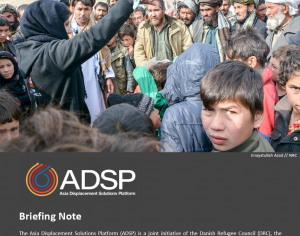
ADSP Expert Commentary #2: Rethinking Durable Solutions in Peri-Urban Areas in Pakistan

March 26, 2023
Briefing Notes

ADSP Expert Commentary #1: Afghan refugees in Pakistan – Protracted displacement or protracted settlement?

March 20, 2023
TRAININGS AND WORKSHOPS

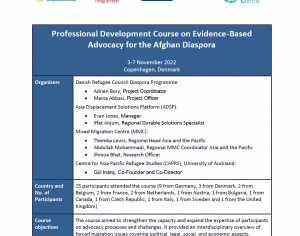
Professional Development Course on Evidence-Based Advocacy for the Afghan Diaspora

January 4, 2023
Briefing Notes

Briefing Note: IDP returns in Afghanistan: are durable solutions possible?

October 17, 2022
Newsletters

ADSP Newsletter: Q3, 2022

October 11, 2022
Newsletters

ADSP Newsletter: Q2, 2022

July 13, 2022
Opinion Articles / media

ADSP Op-Ed: Amid Afghanistan’s Emergency, Its Neighbors Need Support

June 27, 2022
News

ADSP Article: Lessons from drought response in Afghanistan

May 29, 2022
Newsletters

ADSP Newsletter: Q1, 2022

April 18, 2022
News

ADSP Submission: Intersessional Panel Discussion on the human rights of migrants in vulnerable situations

March 8, 2022
News

ADSP Newsletter: Q4, 2021

January 17, 2022
News

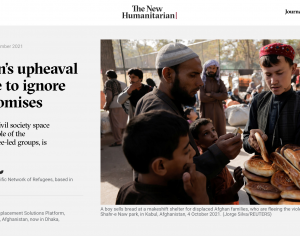
ADSP Op-Ed: Afghanistan’s upheaval is no excuse to ignore local aid promises

November 30, 2021
News

UK Foreign Affairs Committee inquiry into the future of UK policy towards Afghanistan following the international military withdrawal: Written evidence submitted by Asia Displacement Solutions Platform (AFG0014)

October 15, 2021
Newsletters

ADSP Q3 Newsletter 2021

October 1, 2021
News

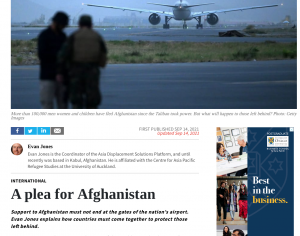
Op-Ed: A plea for Afghanistan

September 20, 2021
News

ADSP Op-Ed: As international troops depart Afghanistan, the threat of landmines remains

August 11, 2021
News

Statement: Rising instability necessitates immediate suspension of deportations to Afghanistan

July 15, 2021
News

ADSP Op-Ed: Troop withdrawals won’t end Afghanistan’s humanitarian crisis

June 19, 2021
Publications

Lessons Learned & Recommendations: Re-Imagining the 2018 Afghanistan Drought Response

January 31, 2021
Publications

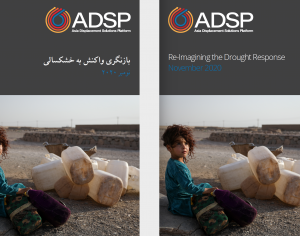
Re-Imagining the 2018 Afghanistan Drought Response

January 31, 2021
News

ADSP Op-Ed: Will the Afghanistan Conference deliver for Afghan refugees?

November 24, 2020

Recent Posts

  • ADSP Newsletter: Q4, 2025
  • ADSP Newsletter: Q3, 2025
  • Toward Durable Solutions: Mapping and Analysis of Displacement Data in Asia and the Pacific
  • Research Brief: Durable Solutions Analysis in Herat (July 2025)

Funded by

CONTACT US
[email protected]

© ADSP - Asia Displacement Solutions Platform 2022
  • Privacy Policy & Cookie
This website uses cookies to improve your experience. We'll assume you're ok with this, but you can opt-out if you wish.Accept Read More
Privacy & Cookies Policy

Privacy Overview

This website uses cookies to improve your experience while you navigate through the website. Out of these, the cookies that are categorized as necessary are stored on your browser as they are essential for the working of basic functionalities of the website. We also use third-party cookies that help us analyze and understand how you use this website. These cookies will be stored in your browser only with your consent. You also have the option to opt-out of these cookies. But opting out of some of these cookies may affect your browsing experience.
Necessary
Always Enabled
Necessary cookies are absolutely essential for the website to function properly. This category only includes cookies that ensures basic functionalities and security features of the website. These cookies do not store any personal information.
Non-necessary
Any cookies that may not be particularly necessary for the website to function and is used specifically to collect user personal data via analytics, ads, other embedded contents are termed as non-necessary cookies. It is mandatory to procure user consent prior to running these cookies on your website.
SAVE & ACCEPT