ADSP
  • WHO WE ARE
    • History
    • Where we work
    • ADSP Strategy 2023-2025
    • Our team
    • Governing body
  • WHAT WE DO
    • Projects
    • TRAININGS AND WORKSHOPS
    • Research
    • Advocacy
    • Our Impact
    • RESOURCES
      • Global
      • Region
      • Afghanistan
      • Iran
      • Pakistan
      • Policies & Strategies
  • PUBLICATIONS
    • Research Reports
    • Statements
    • Press Releases
    • Briefing Notes
    • Submissions
    • Opinion Articles / media
    • NEWSLETTERS
  • VISUALISATIONS
    • Herat data visualisation
  • TRAININGS
  • CONTACT US

News

HomeNews

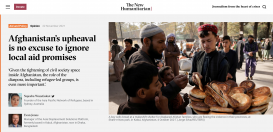
ADSP Op-Ed: Afghanistan’s upheaval is no excuse to ignore local aid promises

November 30, 2021

‘Given the tightening of civil society space inside Afghanistan, the role of the diaspora, including refugee-led groups, is even more important.’

SYDNEY and DHAKA

Donor support for Afghanistan must include civil society and diaspora groups – or risk eroding local skills and fuelling aid dependency. Without proper support, Afghan-led groups will suffer, and the civil society capacity that has been built over the past 20 years will begin to crumble.

Donors and governments responded to the Taliban’s August resurgence by redirecting most long-term development aid to immediate humanitarian needs, often through UN agencies or big international NGOs.

Such moves are intended to ensure that funds don’t go directly to the de facto governing authority. It’s a predictable reaction from the international community, but the pendulum must not swing too far. Proportional humanitarian, development, and peacebuilding funding remains essential, as is the need to fund local civil society.

Afghanistan’s humanitarian needs are well-documented. The economy is collapsing, and hunger is growing: More than half the population could face crisis or emergency levels of food insecurity as the bitter winter months approach.

The shift to humanitarian funding is pragmatic, and will undoubtedly save countless lives in the short-term. But what was important for Afghanistan’s long-term development before August is still vital today.

Development needs – such as improving agricultural techniques or delivering long-term education programmes – haven’t disappeared. If anything, they will become more essential. And the local civil society groups and professional aid workers that are the backbone of any aid operation in Afghanistan will be crucial to meeting these needs.

Brain drain

Afghan civil society has matured and professionalised over the last 20 years. Across the country, men and women have worked side by side to deliver a vast range of services and life-saving assistance to other Afghans in need. Whether it be through water and sanitation projects, food security, demining, healthcare, or education, Afghan civil society actors have played an important role, and continue to be on the front lines today.

Since the Taliban takeover, however, local civil society organisations have been disproportionately affected by cash shortages and an exodus of talented aid staff. Many have fled to other countries, and many more are planning to leave – especially those in positions of management and leadership.

There are multiple reasons behind the brain drain: Some have fled because they fear for their lives or basic rights under the Taliban; others who might otherwise be willing to stay are driven away because of the dire economic situation.

“Smaller civil society groups will have the most difficulty withstanding the shocks.”

This loss of institutional memory and talent is a huge hit to all aid groups – whether they be homegrown civil society organisations or international NGOs, which are also staffed mainly by Afghans. But the much smaller civil society groups will have the most difficulty withstanding the shocks.

Sanctions and other restrictions have made it much more complex – and costly – to get cash into the country. Some donors are taking a “wait-and-see approach” regarding how they will continue to engage with Afghanistan. Many donors and governments are relying even more heavily on international agencies and NGOs.

Given that local organisations are unable to weather a cash crunch like larger INGOs, many are quickly running out of cash and are re-considering their future. As donors freeze, reallocate, and pivot funding, there is a real risk that local civil society groups will be left by the wayside.

In Afghanistan, as in much of the world, most humanitarian and development funding is channelled through international aid agencies. The global aid community has pledged to reverse some of this imbalance by localising humanitarian aid.

Despite today’s immense challenges, these commitments are just as crucial today as they were when they were made as part of 2016’s Grand Bargain aid reforms.

Providing support to local groups – either directly, or through more equal partnerships with international NGOs – will be key to stemming the brain drain and preserving the capacity of Afghan civil society.

Beyond borders

The need to support local aid in Afghanistan is as strong as ever. The same applies to groups in the diaspora, including refugee-led organisations, who have helped Afghans both in and out of the country.

Given the tightening of civil society space inside Afghanistan, the role of the diaspora, including refugee-led groups, is even more important.

The Asia Pacific Network of Refugees, for example, has helped Afghans leave the country, and pushed for greater protections for refugees and migrants abroad. Through networks within Afghanistan, diaspora groups have helped provide food and supplies, as well as safe lodging to women at risk.

All of this has been achieved through donations from crowdfunding and other community campaigns. This work has been grounded and led by local organisations and individuals in Afghanistan, with virtual consultations held between the diaspora and local organisations to ensure that outside support meets the on-the-ground needs.

“Given the tightening of civil society space inside Afghanistan, the role of the diaspora is even more important.”

Like local civil society organisations, diaspora and refugee-led groups are often under-funded, and rely on goodwill and the energy of volunteers. Some donors are supporting refugee-led initiatives by asking larger, established organisations to accept the money and pass it on while absorbing administration fees. But this is the exception rather than the rule. If the diaspora is to have a real chance to continue making a difference at this pivotal juncture, it needs sustained resources.

Afghanistan’s new reality is complicated. There will be hurdles ahead for the global aid community – from transferring funds, to sanctions and political risks. But these difficulties must not be an excuse to shy away from commitments to support Afghan-led aid.

Afghanistan’s short-term humanitarian needs, and its long-term development goals, can only be addressed by working with Afghans at home and abroad in a genuine partnership.

This article was originally published in The New Humanitarian and can be viewed in its original form here. 
TagsAfghanistandiasporafundinglocal

Related Posts

Newsletters

ADSP Newsletter: Q4, 2025

March 11, 2026
Newsletters

ADSP Newsletter: Q3, 2025

December 12, 2025
Publications

Research Brief: Durable Solutions Analysis in Herat (July 2025)

August 28, 2025
Newsletters

ADSP Newsletter: Q2, 2025

August 18, 2025
Newsletters

ADSP Newsletter: Q1, 2025

May 29, 2025
Publications

ADSP Statement: One million Afghans returned from Pakistan at risk if unsupported

May 23, 2025
Newsletters

ADSP Newsletter: Q4, 2024

January 30, 2025
Opinion Articles / media

Expert Analysis: Water, climate, and refuge across Afghanistan and the sub-region (October 2024)

November 29, 2024
Newsletters

ADSP Newsletter: Q3, 2024

November 19, 2024
Publications

Research Brief: Durable Solutions Analysis, Jalalabad/Nangarhar (August 2024)

September 5, 2024
Newsletters

ADSP Newsletter: Q2, 2024

August 14, 2024
Publications

Research Brief: Land Allocation Schemes for the Displaced in Afghanistan (June 2024)

August 6, 2024
Newsletters

ADSP Newsletter: Q1, 2024

June 7, 2024
Briefing Notes

Briefing Note: Solutions for Afghan nationals ordered to return from Pakistan

May 13, 2024
Newsletters

ADSP Newsletter: Q4, 2023

December 27, 2023
Briefing Notes

ADSP Briefing Note – Afghan Children’s Access to Education in Iran and Pakistan

December 22, 2023
Briefing Notes

ADSP Briefing Note – Forced to migrate: Afghan women waiting for protection in Iran and Pakistan

December 22, 2023
News

ADSP-ICVA Statement – The SSAR Support Platform: ‘Showing Resilience, Seeking Solutions’

December 13, 2023
News

NGO Statement on Protection at UNHCR 74th Executive Committee Meeting

October 14, 2023
Newsletters

ADSP Newsletter: Q3, 2023

October 14, 2023
Briefing Notes

ADSP-ICVA: Explainer to the Support Platform for the Solutions Strategy for Afghan Refugees

September 10, 2023
News

ADSP Newsletter: Q2, 2023

June 24, 2023
Briefing Notes

ADSP Briefing Note: Local Integration? Insights from the field, and from a local NGO working on improving the resilience of displacement affected communities

May 17, 2023
Opinion Articles / media

ADSP Op Ed: Calls on donor group, led by Japan and Switzerland, to break deadlock in support for Afghan refugees

May 10, 2023
Briefing Notes

ADSP Briefing Note: Local Integration for IDPs in Kandahar? Insights from the field

April 22, 2023
Newsletters

ADSP Newsletter: Q1, 2023

March 31, 2023
Briefing Notes

ADSP Expert Commentary #2: Rethinking Durable Solutions in Peri-Urban Areas in Pakistan

March 26, 2023
Briefing Notes

ADSP Expert Commentary #1: Afghan refugees in Pakistan – Protracted displacement or protracted settlement?

March 20, 2023
TRAININGS AND WORKSHOPS

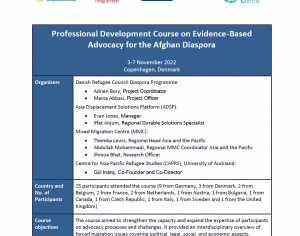
Professional Development Course on Evidence-Based Advocacy for the Afghan Diaspora

January 4, 2023
Briefing Notes

Briefing Note: IDP returns in Afghanistan: are durable solutions possible?

October 17, 2022
Newsletters

ADSP Newsletter: Q3, 2022

October 11, 2022
Newsletters

ADSP Newsletter: Q2, 2022

July 13, 2022
Opinion Articles / media

ADSP Op-Ed: Amid Afghanistan’s Emergency, Its Neighbors Need Support

June 27, 2022
News

ADSP Article: Lessons from drought response in Afghanistan

May 29, 2022
Newsletters

ADSP Newsletter: Q1, 2022

April 18, 2022
News

ADSP Submission: Intersessional Panel Discussion on the human rights of migrants in vulnerable situations

March 8, 2022
News

ADSP Newsletter: Q4, 2021

January 17, 2022
News

UK Foreign Affairs Committee inquiry into the future of UK policy towards Afghanistan following the international military withdrawal: Written evidence submitted by Asia Displacement Solutions Platform (AFG0014)

October 15, 2021
Newsletters

ADSP Q3 Newsletter 2021

October 1, 2021
News

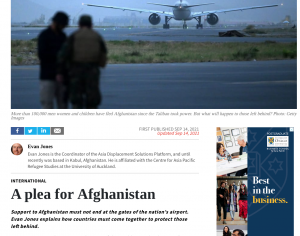
Op-Ed: A plea for Afghanistan

September 20, 2021
News

ADSP Op-Ed: As international troops depart Afghanistan, the threat of landmines remains

August 11, 2021
News

Statement: Rising instability necessitates immediate suspension of deportations to Afghanistan

July 15, 2021
News

ADSP Op-Ed: Troop withdrawals won’t end Afghanistan’s humanitarian crisis

June 19, 2021
News

ADSP Op-Ed: Forced return of Afghans hampers the pursuit of durable solutions

April 22, 2021
Publications

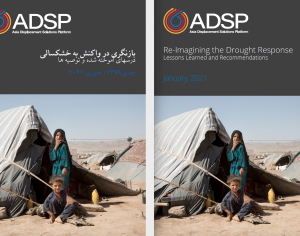
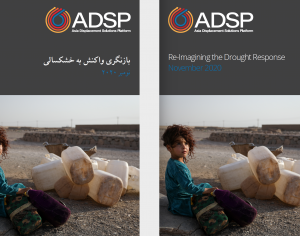
Lessons Learned & Recommendations: Re-Imagining the 2018 Afghanistan Drought Response

January 31, 2021
Publications

Re-Imagining the 2018 Afghanistan Drought Response

January 31, 2021
News

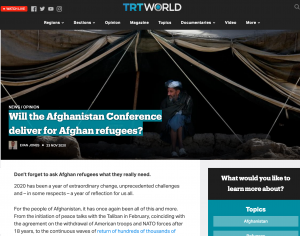
ADSP Op-Ed: Will the Afghanistan Conference deliver for Afghan refugees?

November 24, 2020

Recent Posts

  • ADSP Newsletter: Q4, 2025
  • ADSP Newsletter: Q3, 2025
  • Toward Durable Solutions: Mapping and Analysis of Displacement Data in Asia and the Pacific
  • Research Brief: Durable Solutions Analysis in Herat (July 2025)

Funded by

CONTACT US
[email protected]

© ADSP - Asia Displacement Solutions Platform 2022
  • Privacy Policy & Cookie
This website uses cookies to improve your experience. We'll assume you're ok with this, but you can opt-out if you wish.Accept Read More
Privacy & Cookies Policy

Privacy Overview

This website uses cookies to improve your experience while you navigate through the website. Out of these, the cookies that are categorized as necessary are stored on your browser as they are essential for the working of basic functionalities of the website. We also use third-party cookies that help us analyze and understand how you use this website. These cookies will be stored in your browser only with your consent. You also have the option to opt-out of these cookies. But opting out of some of these cookies may affect your browsing experience.
Necessary
Always Enabled
Necessary cookies are absolutely essential for the website to function properly. This category only includes cookies that ensures basic functionalities and security features of the website. These cookies do not store any personal information.
Non-necessary
Any cookies that may not be particularly necessary for the website to function and is used specifically to collect user personal data via analytics, ads, other embedded contents are termed as non-necessary cookies. It is mandatory to procure user consent prior to running these cookies on your website.
SAVE & ACCEPT