ADSP
  • WHO WE ARE
    • History
    • Where we work
    • ADSP Strategy 2023-2025
    • Our team
    • Governing body
  • WHAT WE DO
    • Projects
    • TRAININGS AND WORKSHOPS
    • Research
    • Advocacy
    • Our Impact
    • RESOURCES
      • Global
      • Region
      • Afghanistan
      • Iran
      • Pakistan
      • Policies & Strategies
  • PUBLICATIONS
    • Research Reports
    • Statements
    • Press Releases
    • Briefing Notes
    • Submissions
    • Opinion Articles / media
    • NEWSLETTERS
  • VISUALISATIONS
    • Herat data visualisation
  • TRAININGS
  • CONTACT US

News

HomeNews

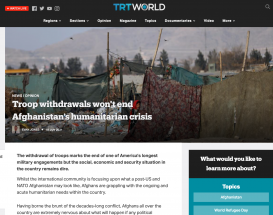
ADSP Op-Ed: Troop withdrawals won’t end Afghanistan’s humanitarian crisis

June 19, 2021

The withdrawal of troops marks the end of one of America’s longest military engagements but the social, economic and security situation in the country remains dire.

Whilst the international community is focusing upon what a post-US and NATO Afghanistan may look like, Afghans are grappling with the ongoing and acute humanitarian needs within the country.

Having borne the brunt of the decades-long conflict, Afghans all over the country are extremely nervous about what will happen if any political settlement between the government and the Taliban is reached. The situation on the ground remains dire for tens of millions of people, with continued risk of conflict, the devastating effects of climate change and residual impacts from decades of war.

As the world marks the seventieth anniversary of the 1951 Refugee Convention on June 20, it’s incumbent upon the international community to reflect upon the plight of Afghans everywhere – whether it be the 19 million Afghans that live below the poverty line, Afghan refugees who remain in exile or those who are stuck in limbo.

Irrespective of the troop withdrawal timetable, the fundamental humanitarian needs of Afghans will not change, and as such, donors must remain steadfast both in terms of support inside the country as well as countries hosting large numbers of refugees such as Iran and Pakistan.

Impending drought

Afghanistan’s unique geography and climate mean that it routinely faces severe climatic events such as extreme temperatures, flooding and drought. In 2018, the drought in the country’s western region was so severe that it displaced more than 170,000 people. Primarily from provinces bordering Herat in the west, this group of people was forced to seek refuge in other parts of the country simply to meet their basic needs. A significant number remain housed in informal settlements to this day, unable to return home and unable to integrate into local communities.

Fast forward to 2021, and Afghanistan is once again on the precipice of yet another drought. Anticipated to diminish the quality and quantity of crop yields, and the livelihoods of tens of thousands of subsistence farmers, the potential results from this drought could again be disastrous. According to the Afghanistan National Disaster Management Authority (ANDMA), 17 provinces are facing the bleak prospect of a one-in-twenty-year drought. A further 24 districts are facing a one-in-ten-year scenario.

Should these forecasts come true, more than nine million persons are likely to be affected by hunger, malnutrition and food insecurity. According to the 2021 UN Humanitarian Needs Overview, Afghanistan has the second-highest number of people in the world suffering from emergency levels of food insecurity.

Risk of explosive remnants of war

Beset by fighting, conflict and war since 1979, Afghanistan is also battling with a silent and indiscriminate killer that does not receive the same news coverage as roadside attacks or other heinous events: unexploded ordnances and other explosive remnants of war (ERW).

With 40,373 civilians killed by landmines or ERWs since 1989, and an estimated one million Afghans living within 500 metres of a mine-contaminated area, it will take demining and clearance teams several years to make the country safe from this threat. In the meantime, casualties will continue to increase, as men, women and children fall victim to these objects that are solely designed to kill and maim.

In 2020 alone, there were 1,473 reported civilian casualties from unexploded ordnance, a figure that has jumped since the previous year. Of this number, approximately half were children. A large number are also internally displaced persons, who may often return to their places of origin to farm, but without the understanding and knowledge of the hazards that may exist.

Violence, insecurity and conflict

Afghanistan is no stranger to conflict, having held the unfortunate title of ‘World’s Least Peaceful Country’ since 2019. If that’s not enough, the country also reverted to being designated as a country in ‘active conflict’ in 2018.

Afghanistan has witnessed a deteriorating security situation in recent years, with targeted killings, kidnappings and explosions placing fear into the lives of everyday Afghans. Many are nervous about what the future may hold. Devastating attacks on innocent civilians are far from rare. Most recently, on May 8, there were a series of explosions outside a school for girls in the Dasht-e-Barchi neighbourhood of Kabul. Killing and injuring more than 150 young schoolgirls, the attack drew worldwide condemnation. Despite the global outrage, however, such attacks will likely continue, with government forces, political opponents and civilians all in the firing line.

Ongoing conflict across the country over many decades has resulted in more than six million Afghans seeking refugee outside of the country. A further five million are displaced within Afghanistan, without access to basic services and facing barriers to attaining fundamental human rights. With seemingly no end in sight to the violence and conflict that has plagued the country, conflict-induced displacement is likely to remain for the foreseeable future.

Where to from here?

Although the rapid timetable for troop withdrawals will bring foreign military presence to an end in just a few months, Afghanistan’s social and economic recovery will take much longer. There is no doubt that the humanitarian situation in Afghanistan will remain dire in the months and years ahead, with no prospects for a dramatic change in the lives and livelihoods of millions of Afghans.

It is therefore critical that the international community make clear their intentions to support Afghanistan and its neighbours for the long haul. Only then will we have the opportunity to witness what all Afghans desire – a safe and prosperous Afghanistan.

This article was originally published in TRT World, and can be accessed here.
TagsAfghanistan

Related Posts

Newsletters

ADSP Newsletter: Q4, 2025

March 11, 2026
Newsletters

ADSP Newsletter: Q3, 2025

December 12, 2025
Publications

Research Brief: Durable Solutions Analysis in Herat (July 2025)

August 28, 2025
Newsletters

ADSP Newsletter: Q2, 2025

August 18, 2025
Newsletters

ADSP Newsletter: Q1, 2025

May 29, 2025
Publications

ADSP Statement: One million Afghans returned from Pakistan at risk if unsupported

May 23, 2025
Newsletters

ADSP Newsletter: Q4, 2024

January 30, 2025
Opinion Articles / media

Expert Analysis: Water, climate, and refuge across Afghanistan and the sub-region (October 2024)

November 29, 2024
Newsletters

ADSP Newsletter: Q3, 2024

November 19, 2024
Publications

Research Brief: Durable Solutions Analysis, Jalalabad/Nangarhar (August 2024)

September 5, 2024
Newsletters

ADSP Newsletter: Q2, 2024

August 14, 2024
Publications

Research Brief: Land Allocation Schemes for the Displaced in Afghanistan (June 2024)

August 6, 2024
Newsletters

ADSP Newsletter: Q1, 2024

June 7, 2024
Briefing Notes

Briefing Note: Solutions for Afghan nationals ordered to return from Pakistan

May 13, 2024
Newsletters

ADSP Newsletter: Q4, 2023

December 27, 2023
Briefing Notes

ADSP Briefing Note – Afghan Children’s Access to Education in Iran and Pakistan

December 22, 2023
Briefing Notes

ADSP Briefing Note – Forced to migrate: Afghan women waiting for protection in Iran and Pakistan

December 22, 2023
News

ADSP-ICVA Statement – The SSAR Support Platform: ‘Showing Resilience, Seeking Solutions’

December 13, 2023
News

NGO Statement on Protection at UNHCR 74th Executive Committee Meeting

October 14, 2023
Newsletters

ADSP Newsletter: Q3, 2023

October 14, 2023
Briefing Notes

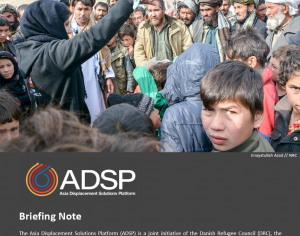
ADSP-ICVA: Explainer to the Support Platform for the Solutions Strategy for Afghan Refugees

September 10, 2023
News

ADSP Newsletter: Q2, 2023

June 24, 2023
Briefing Notes

ADSP Briefing Note: Local Integration? Insights from the field, and from a local NGO working on improving the resilience of displacement affected communities

May 17, 2023
Opinion Articles / media

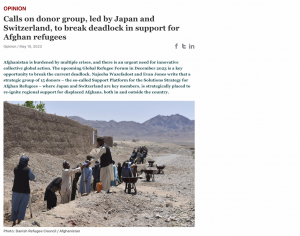
ADSP Op Ed: Calls on donor group, led by Japan and Switzerland, to break deadlock in support for Afghan refugees

May 10, 2023
Briefing Notes

ADSP Briefing Note: Local Integration for IDPs in Kandahar? Insights from the field

April 22, 2023
Newsletters

ADSP Newsletter: Q1, 2023

March 31, 2023
Briefing Notes

ADSP Expert Commentary #2: Rethinking Durable Solutions in Peri-Urban Areas in Pakistan

March 26, 2023
Briefing Notes

ADSP Expert Commentary #1: Afghan refugees in Pakistan – Protracted displacement or protracted settlement?

March 20, 2023
TRAININGS AND WORKSHOPS

Professional Development Course on Evidence-Based Advocacy for the Afghan Diaspora

January 4, 2023
Briefing Notes

Briefing Note: IDP returns in Afghanistan: are durable solutions possible?

October 17, 2022
Newsletters

ADSP Newsletter: Q3, 2022

October 11, 2022
Newsletters

ADSP Newsletter: Q2, 2022

July 13, 2022
Opinion Articles / media

ADSP Op-Ed: Amid Afghanistan’s Emergency, Its Neighbors Need Support

June 27, 2022
News

ADSP Article: Lessons from drought response in Afghanistan

May 29, 2022
Newsletters

ADSP Newsletter: Q1, 2022

April 18, 2022
News

ADSP Submission: Intersessional Panel Discussion on the human rights of migrants in vulnerable situations

March 8, 2022
News

ADSP Newsletter: Q4, 2021

January 17, 2022
News

ADSP Op-Ed: Afghanistan’s upheaval is no excuse to ignore local aid promises

November 30, 2021
News

UK Foreign Affairs Committee inquiry into the future of UK policy towards Afghanistan following the international military withdrawal: Written evidence submitted by Asia Displacement Solutions Platform (AFG0014)

October 15, 2021
Newsletters

ADSP Q3 Newsletter 2021

October 1, 2021
News

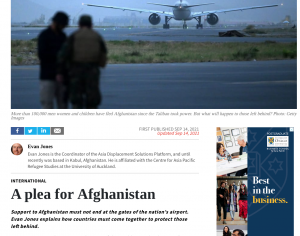
Op-Ed: A plea for Afghanistan

September 20, 2021
News

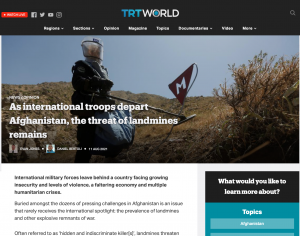
ADSP Op-Ed: As international troops depart Afghanistan, the threat of landmines remains

August 11, 2021
News

Statement: Rising instability necessitates immediate suspension of deportations to Afghanistan

July 15, 2021
News

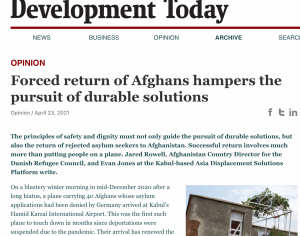
ADSP Op-Ed: Forced return of Afghans hampers the pursuit of durable solutions

April 22, 2021
Publications

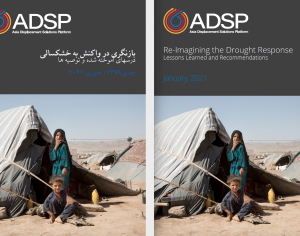
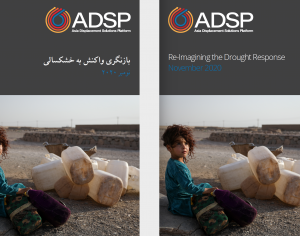
Lessons Learned & Recommendations: Re-Imagining the 2018 Afghanistan Drought Response

January 31, 2021
Publications

Re-Imagining the 2018 Afghanistan Drought Response

January 31, 2021
News

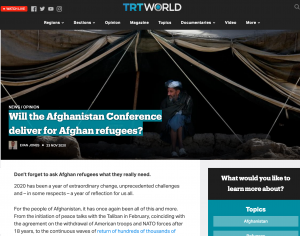
ADSP Op-Ed: Will the Afghanistan Conference deliver for Afghan refugees?

November 24, 2020

Recent Posts

  • ADSP Newsletter: Q4, 2025
  • ADSP Newsletter: Q3, 2025
  • Toward Durable Solutions: Mapping and Analysis of Displacement Data in Asia and the Pacific
  • Research Brief: Durable Solutions Analysis in Herat (July 2025)

Funded by

CONTACT US
[email protected]

© ADSP - Asia Displacement Solutions Platform 2022
  • Privacy Policy & Cookie
This website uses cookies to improve your experience. We'll assume you're ok with this, but you can opt-out if you wish.Accept Read More
Privacy & Cookies Policy

Privacy Overview

This website uses cookies to improve your experience while you navigate through the website. Out of these, the cookies that are categorized as necessary are stored on your browser as they are essential for the working of basic functionalities of the website. We also use third-party cookies that help us analyze and understand how you use this website. These cookies will be stored in your browser only with your consent. You also have the option to opt-out of these cookies. But opting out of some of these cookies may affect your browsing experience.
Necessary
Always Enabled
Necessary cookies are absolutely essential for the website to function properly. This category only includes cookies that ensures basic functionalities and security features of the website. These cookies do not store any personal information.
Non-necessary
Any cookies that may not be particularly necessary for the website to function and is used specifically to collect user personal data via analytics, ads, other embedded contents are termed as non-necessary cookies. It is mandatory to procure user consent prior to running these cookies on your website.
SAVE & ACCEPT