ADSP Advocacy Toolkit

This toolkit has been developed to offer practical guidance to diaspora actors in different areas: (1) Diaspora Fundraising, (2) Community Outreach (3) Networking and Alliances Building and (4) Advocacy. Diaspora communities, organisations, and individuals are increasingly vocal and influential, advocating for social, economic, and political change in their country of origin, the country of residence…

READ MORE

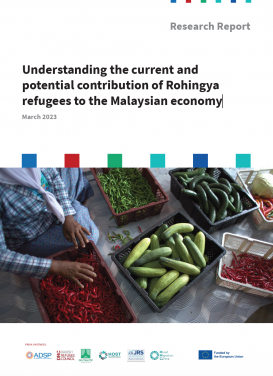
Research Report: Refugee protection, human smuggling, and trafficking in Bangladesh and Southeast Asia

The ‘Protecting Rohingya Refugees in Asia’ project brings together the Danish Refugee Council, the Asia Displacement Solutions Platform, the Mixed Migration Centre, Jesuit Refugee Service (JRS) Indonesia, HOST International, and the Geutanyoë Foundation to enhance regional protection responses in support of Rohingya refugees. Through support from the European Civil Protection and Humanitarian Aid Operations (ECHO),…

READ MORE

ADSP Study: Barriers to accessing COVID-19 related healthcare for Afghan refugees in Khyber Pakhtunkhwa, Pakistan

Pakistan is hosting more than 1.44 million registered Afghans1 who have been forced to flee their homes, primarily due to war, internal conflict, insecurity, and persecution. Most refugees live in Khyber Pakhtunkhwa (KP) Province, located along the Afghan border2. Of these, 990,947 are registered outside Refugee Villages3 while a further 444,439 are registered inside Refugee…

READ MORE

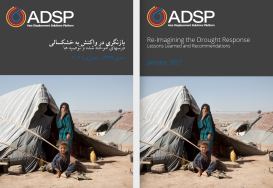
Lessons Learned & Recommendations: Re-Imagining the 2018 Afghanistan Drought Response

As part of ADSP’s research into the 2018 drought response, a series of lessons learned and recommendations have been developed. These lessons are designed to inform improved responses in relation future events, in an attempt to mitigate the chances of further protracted displacement. While around 3.5 million people were provided with life-saving emergency assistance in…

READ MORE

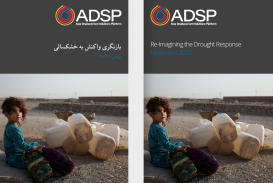
Re-Imagining the 2018 Afghanistan Drought Response

In 2018, over 170,000 people were displaced in Afghanistan’s western region after drought conditions adversely affected livelihoods, forcing locals into chronic food insecurity. Assessments conducted by humanitarian NGOs and aid agencies indicated that insufficient access to water and fodder culminated in crop failure and livestock mortality, respectively. The socio-economic demographic of western Afghanistan is typically…

READ MORE

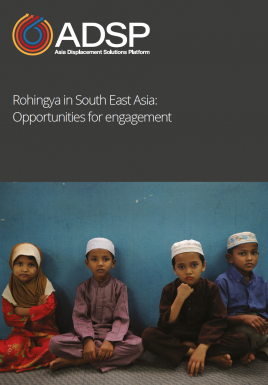
Rohingya in South East Asia: Opportunities for Engagement

With a documented total of almost 1.2 million refugees originating from Myanmar – overwhelmingly Rohingya – this constitutes the world’s fourth largest refugee group by country of origin in 2018. Rohingya also form the world’s largest stateless population. The distinctive settlement policies for Rohingya across the region, varying from encampment to relatively unconstrained urban settlement,…

READ MORE

Developing a CRRF in Afghanistan that is fit for purpose: Lessons Learnt from the East and Horn of Africa

The New York Declaration for Refugees and Migrants, unanimously adopted by the United Nations General Assembly in 2016, sought to respond to protracted refugee situations by providing additional support to refugee-hosting countries to promote refugee integration. It aimed to further integrate development and humanitarian actors, and to promote a ‘whole of society’ approach, addressing displacement…

READ MORE

Action plan for integration: Herat

ADSP is pleased to announce the launch of its Action plan for integration: Herat. The Action Plan aims to guide the programming and policy interventions of a range of humanitarian and development partners, to support the early recovery of communities affected by displacement in Herat. Based on a series of indicators relevant to physical, material,…

READ MORE